From Ancestral Lands to Modern Sovereignty in Palm Springs
The history of the Agua Caliente Band of Cahuilla Indians is foundational to understanding Palm Springs.
Long before the city emerged as a resort destination, the Agua Caliente people lived, adapted, and thrived in the desert environment for thousands of years. Their story is one of deep cultural continuity, profound connection to the land, and resilience in the face of colonization, displacement, and federal policy.
This overview traces key moments in that history—from creation traditions and ancestral territories to federal recognition, land policy, and modern governance. Palm Springs exists within this history, shaped in part by the unique checkerboard pattern of tribal and non-tribal land that remains today.
The Agua Caliente Band of Cahuilla Indians is a federally recognized tribe of the Cahuilla Native American people. Their creation as a federally recognized entity dates back to the early 19th century. This is a brief account of the Agua Caliente Tribe's history.
Cahuilla Leadership Timeline
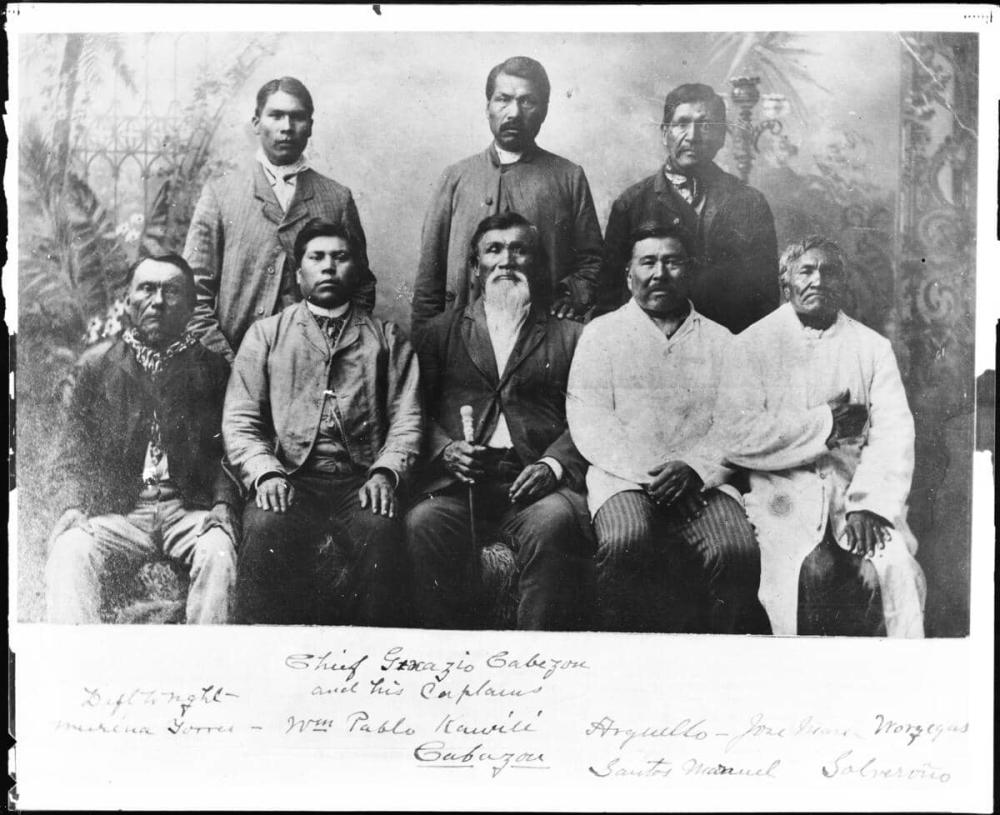
The Agua Caliente tribe was organized into several clans, each with its own leader or chief. These chiefs were responsible for guiding their clans, making important decisions, and representing their people in various matters. Early accounts of the Agua Caliente tribe's leadership highlight their resilience, adaptability, and strong commitment to their people and land. Their leaders played a crucial role in navigating the challenges of colonization while protecting their tribal identity and heritage.
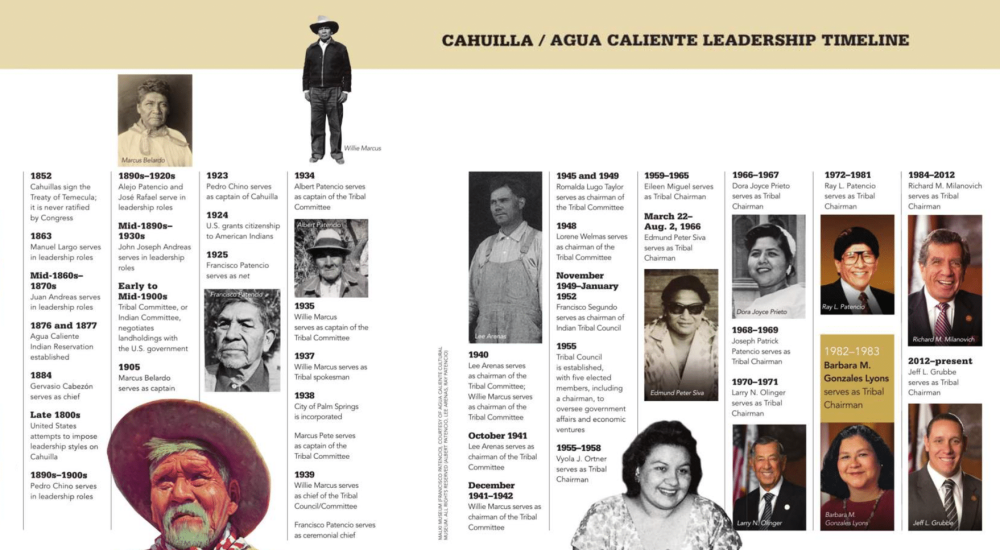
Credit: Agua Caliente Tribe
Note: Reid Milanovich, son of past Chairman Richard Milanovich, is the current Chairman following Jeff Grubbe.
The Agua Caliente tribe continues to maintain a strong leadership structure and works together to address the needs of its community, advocate for its rights, and preserve its cultural heritage.
Cahuilla Creation Story and Traditions
The Agua Caliente tribe's history dates back thousands of years.
There are several versions of the Cahuilla creation story. One version told by Tribal spiritual leader Alejo Patencio in the 1920s begins with Mukat and Temayawut, two brothers who emerged from a swirling mass of colors during the universe’s first moments. After their birth, Mukat and Temayawut formed the earth, the oceans, all the creatures of the sea, and the sky.
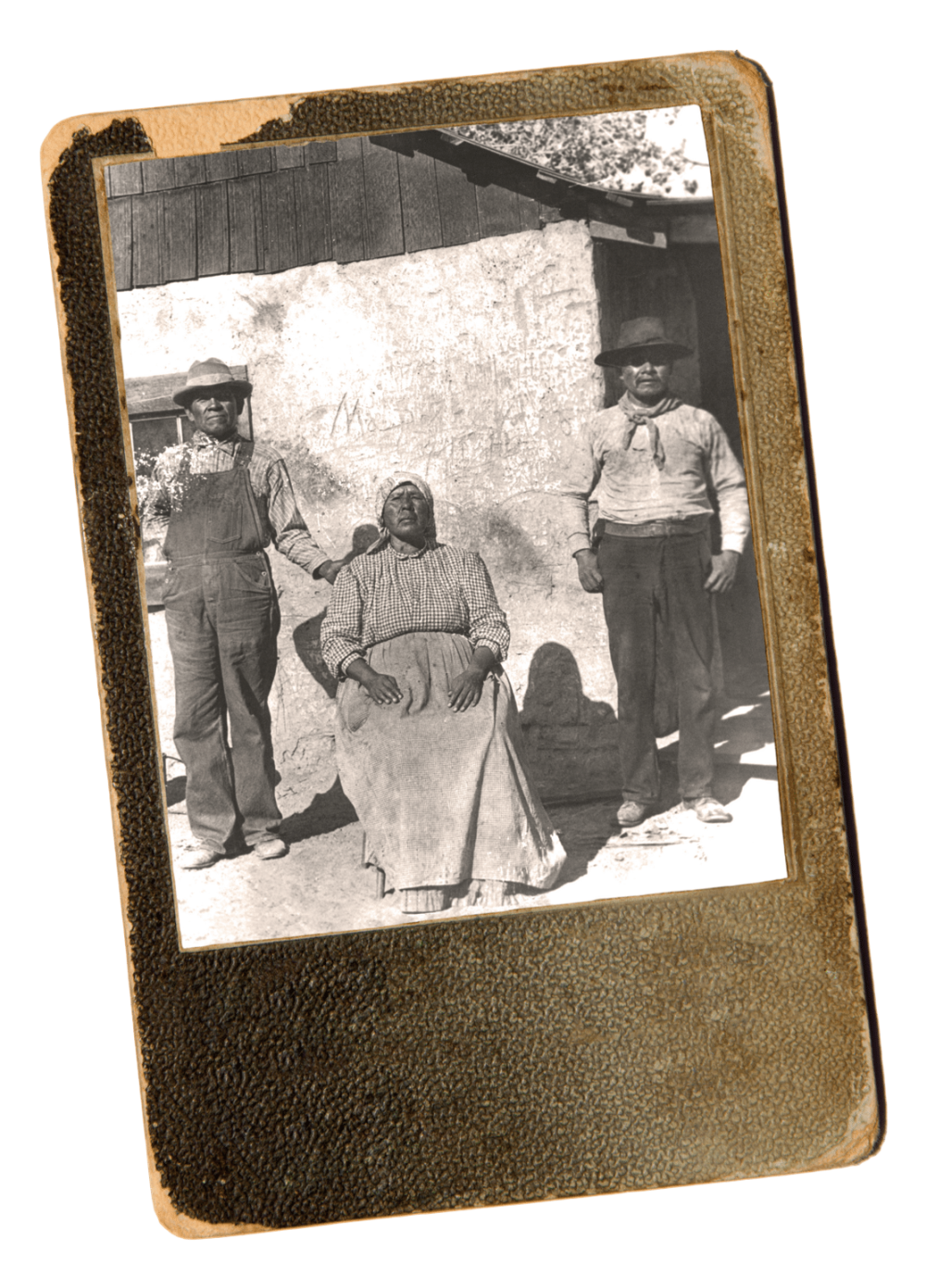
Obove: Francisco, Dolore, Alejo Patencio
From there, the brothers created the first people. Mukat used black mud and worked carefully, while Temayawut used white mud and hastily sculpted his figures, which — compared to Mukat’s — were unrefined. After disagreeing with his brother over whose bodies were better, Temayawut took his creations and left.
Mukat’s creatures came to life, and the sun emerged. These people — the first Cahuilla — lived alongside early beings called nukatem. Because they had more ?kiva?a, the primary energy source from which all things in the universe are created, the nukatem were seen as powerful spirits who appeared in various forms: meteors, rainbows, whirlwinds, stars, and animals. In Mukat’s People, the nukatem “connected the distant past with the present.”
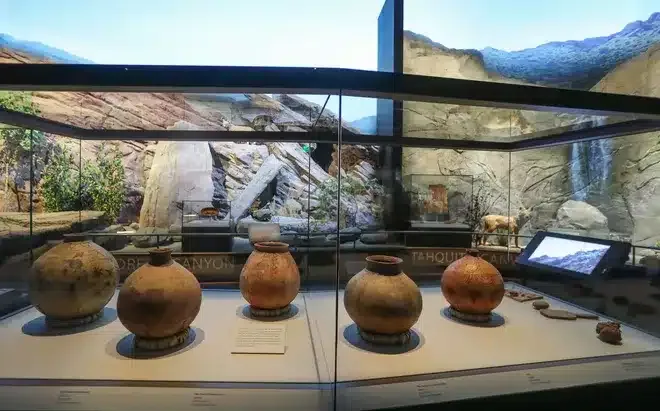
Learn the full creation and migration story by visiting the Agua Caliente Cultural Museum. This tells the story in a 360-degree projection theater setting.
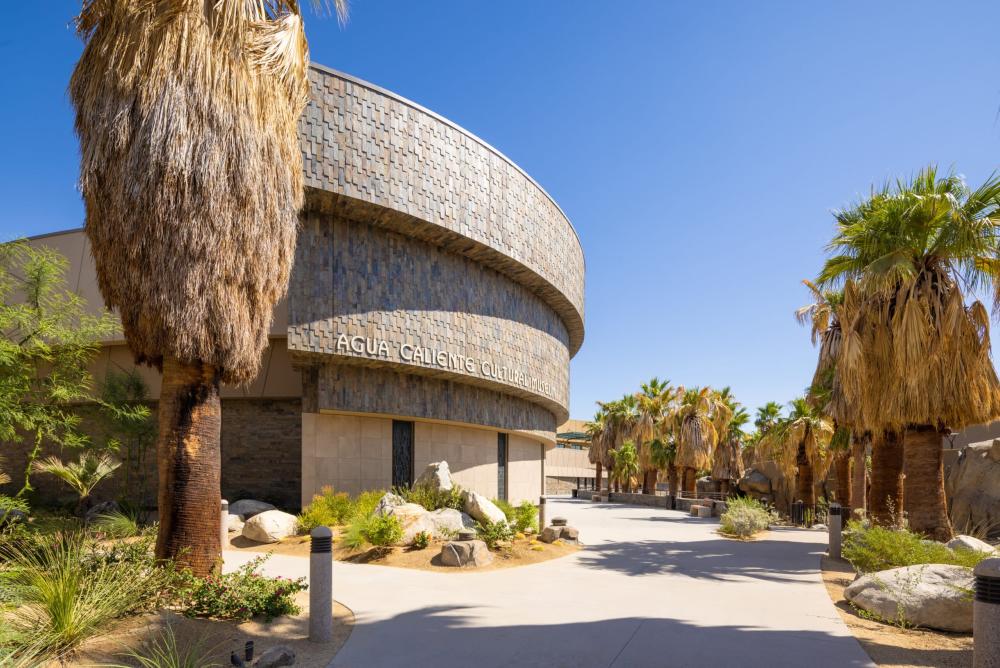
Photo courtesy: Agua Caliente Band of Cahuilla Indians
Cahuilla Territories & Lifeways
The Cahuilla traditionally occupied a vast region spanning present-day Riverside, San Bernardino, and San Diego counties. Over time, they developed into three primary groups:
- Desert Cahuilla (Coachella Valley and surrounding desert regions)
- Mountain Cahuilla (San Jacinto and Santa Rosa Mountains)
- Pass Cahuilla (San Gorgonio Pass)
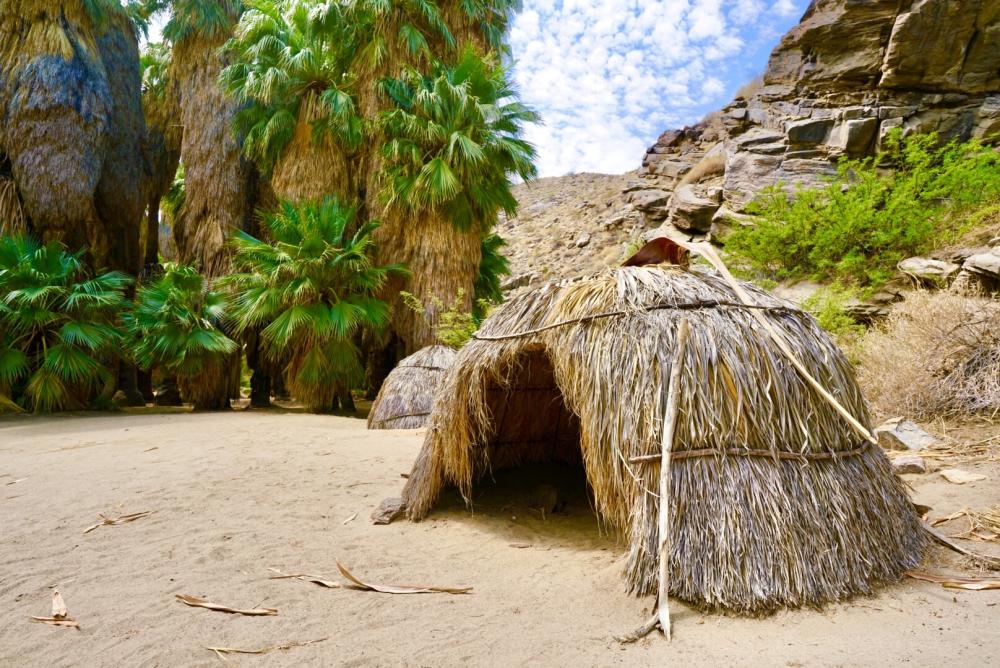
Despite environmental extremes, the Cahuilla maintained a sustainable, semi-nomadic lifestyle. Seasonal movement allowed access to diverse resources—from desert plant life to mountain game.
Social organization centered on clan and village leadership, with cultural practices tied closely to the natural world. Indian Canyon, Tahquitz Canyon, hot springs, and desert landscapes of what is now Palm Springs remain sacred to the Agua Caliente people.
Spanish and Mexican Periods
The arrival of Spanish explorers in the late 18th century marked the beginning of profound disruption.
Mission expansion, new trade routes, and the introduction of foreign diseases significantly impacted Indigenous populations across California. Some Cahuilla engaged with Spanish settlers and missions, while others resisted or remained geographically isolated.
Following Mexican independence in 1821, land policies shifted further. Large tracts of Indigenous land were redistributed for ranching and agriculture, increasing pressure on traditional lifeways and territorial control.
American Expansion and Early U.S. Policy
After the Mexican-American War and California statehood in 1850, American settlement intensified across Southern California.
Though the Indian Removal Act primarily affected tribes east of the Mississippi, it signaled a broader federal approach to Native American affairs—one that would shape policy in California in the decades that followed.
Population growth, resource competition, and land encroachment increasingly affected the Cahuilla.
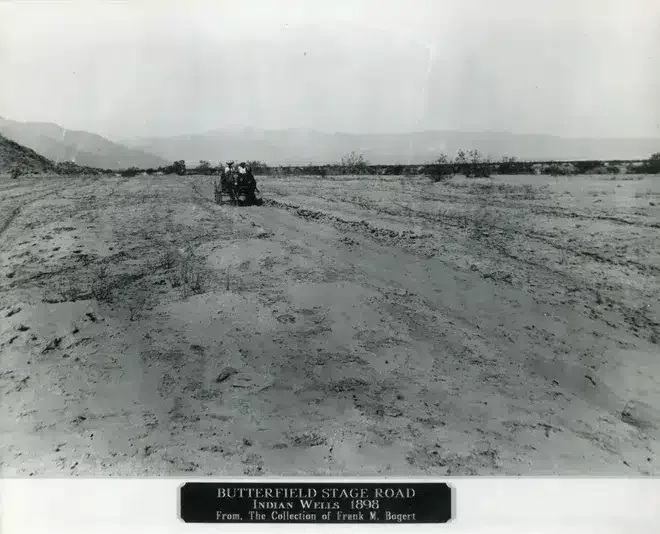
The Bradshaw Trail and Early Contact
California became a state in 1850, bringing a new group of people to Southern California's inland region. The discovery of gold in 1863 created a population surge as potential prospectors flocked to the region where the gold was discovered on the east side of the Colorado River in Arizona. It was the middle of the Civil War, and people were happy to move westward.
William Bradshaw arrived in California in June 1862 to find his fortune. He gathered a party of adventurers and headed eastward from Los Angeles to a rumored new discovery of gold in La Paz ahead of what he anticipated would be another rush for gold and the boom that might make him wealthy. The route they broke was named The Bradshaw Trail. By the end of the Civil War, the link to the eastern states was complete. Bradshaw had opened Arizona and joined it to the United States.
Bradshaw befriended Chief Cabazon, a leader of the Cahuilla tribe, who shared his knowledge of ancient trade routes through the Colorado Desert and the locations of springs and water holes where Bradshaw would establish stations. Bradshaw traveled through Agua Caliente, now Palm Springs.
Southern Pacific Railroad and the Checkerboard Pattern
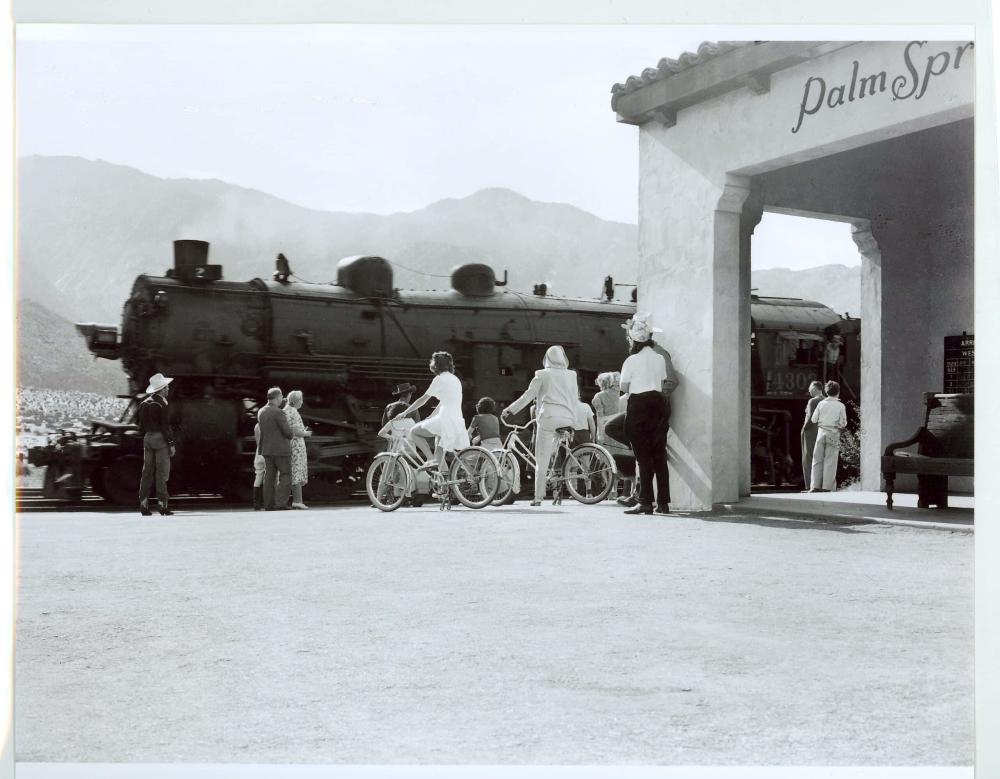
The Southern Pacific Railroad played a significant role in Palm Springs's development. The railroad's construction in the late 19th century opened up new opportunities for trade, tourism, and residential development in the region.
Construction of the Southern Pacific Railroad in Palm Springs began in the early 1870s as part of the company's ambitious expansion across California. The rail line was intended to connect Southern California to the rest of the state and beyond. The company forged a deal with the US government to acquire odd-numbered sections of land in exchange for building the railroad.
Reservation Era and Federal Policy
It wasn’t until the 1870s that the Indian Rights Association emerged in response to the rising conflict over land and rights between Native Americans and non-Indians. The organization proposed reserving parcels of land for native tribes — an idea that initially seemed to protect the Cahuilla. From 1875 to 1877, the U.S. government, under an executive order, established the first reservations for Cahuilla Indians.
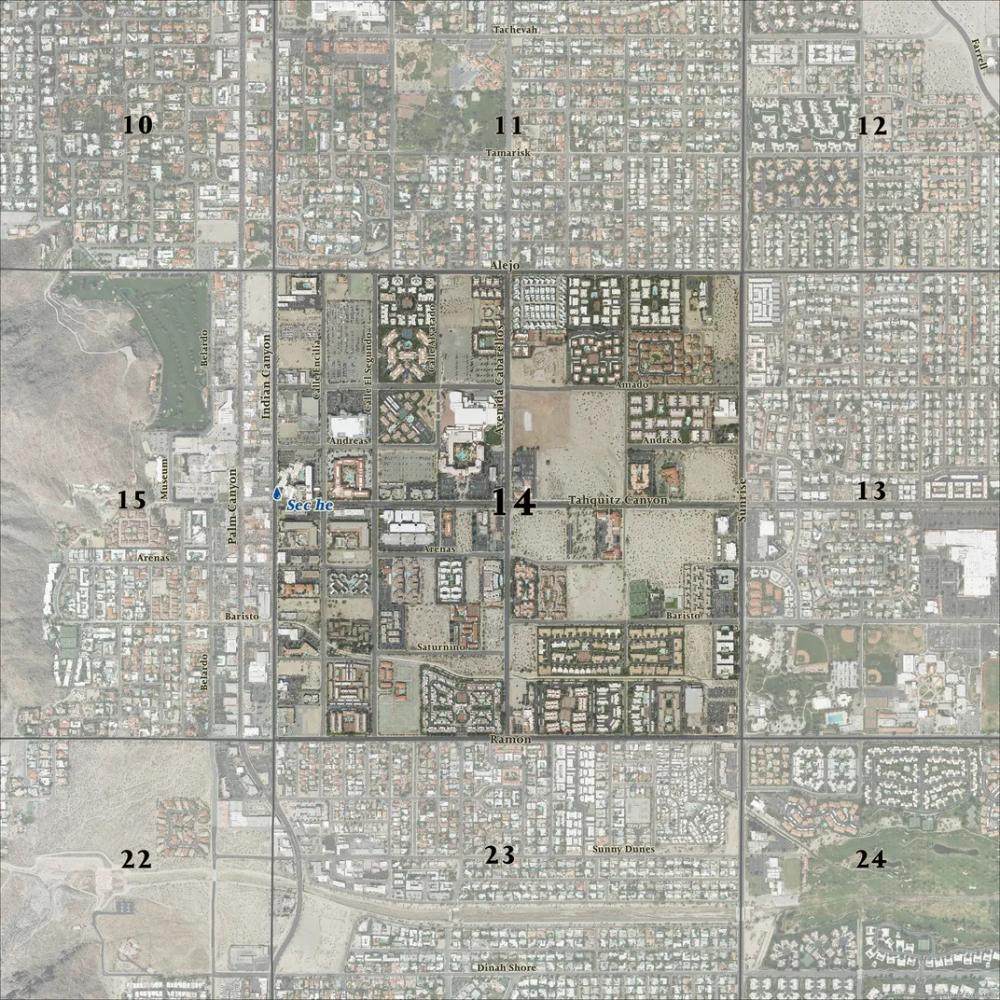
On May 15, 1876, Section 14 and a portion of Section 22 (Tahquitz Canyon) were set aside as the Agua Caliente Indian Reservation by Executive Order of President Ulysses S. Grant. Later, in 1877, President Hayes extended it to cover the even-numbered sections in three townships, which totaled some 32,000 acres. All of the land was tribally owned. The Government had previously given the odd-numbered sections to the railroad in the early 1870s as an incentive to build a cross-country rail line.
The establishment of Indian reservations caused more changes for Native Americans than the arrival of the Spanish. Just 10 years after the first Cahuilla reservations were established, the American government passed the General Allotment Act of 1887, also known as the Dawes Act.
The Dawes Act sought to completely dissolve tribal culture and allowed reservation land to be divided and given to individual tribal members who agreed to separate from the tribe. In return, they were granted U.S. citizenship. Native American children were sent to government schools to learn English, and traditional Indian spiritual practices were banned as a result of these forced assimilation policies. Moreover, the Cahuilla weren’t allowed to govern their people. It would take a nearly four-decade fight for the Cahuilla to gain some semblance of protection over their culture and land.
The reservation is a checkerboard pattern of alternating square miles, left over after the federal land grant to the Southern Pacific Railroad, intended to induce the construction of transcontinental railroad lines. In 1917, Congress authorized these reservation lands to be allotted to individual members of the Agua Caliente Tribe, with the title held in trust by the federal government. However, the Secretary of the Interior failed to execute the allotment for decades, resulting in lawsuits known as the St. Marie Cases filed in 1936.
When the City of Palm Springs was incorporated in 1938, its boundaries included some 8,000 acres of Indian land. At the time, there were 50 members of the Agua Caliente tribe. Palm Springs is the only place in the US where restricted tribal land is intermingled in a checkerboard pattern with other private and public land.
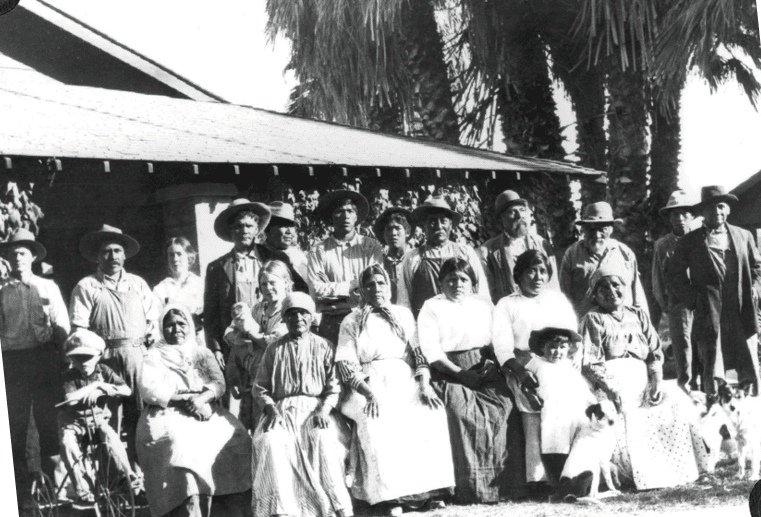
Agua Caliente Tribal Members 1916
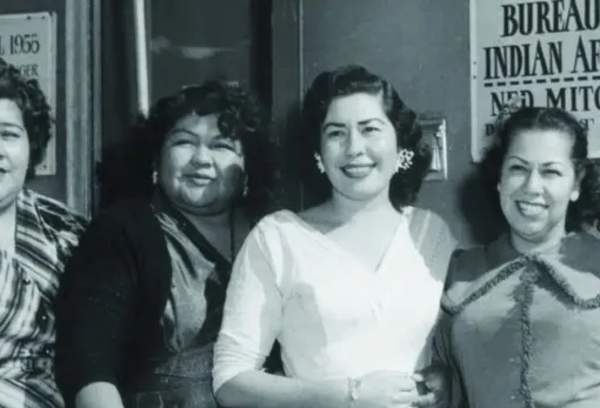
Extensive lobbying by the brave and sophisticated all-female Agua Caliente Tribal Council led by Vyola Ortner, with the assistance of Riverside Congressman Dalip Singh Saund and Palm Springs Mayor Frank Bogert, resulted in President Eisenhower signing into law in 1959 an act to “equalize” the value of allotments to individual tribal members and an amendment to the Indian Leasing Act to authorize the Secretary of the Interior to allow allotted as well as tribal lands to be leased for 99 years, making such lands economically viable and extremely valuable.
Historical Timeline
A simplified timeline helps place key events in context while highlighting the long history of Agua Caliente.
Pre-Contact (Before 1770s)
- Cahuilla people have inhabited the region for thousands of years
- Development of complex social, cultural, and environmental systems across desert, mountain, and pass regions
- Sacred sites, including canyons and hot mineral springs, are established as central to daily and spiritual life
Spanish & Mexican Periods (1770s–1848)
- Spanish exploration and mission system was introduced to California
- Indigenous populations impacted by disease, labor systems, and cultural disruption
- Mexican land grants begin to reshape control of traditional territories
American Expansion (1848–1870s)
- Mexican-American War ends; California becomes U.S. territory
- Increased migration and settlement in Southern California
- Bradshaw Trail established with guidance from Cahuilla leaders
Reservation Establishment (1875–1877)
- Executive orders under Ulysses S. Grant and Rutherford B. Hayes created reservation lands
- Beginning of the federally defined Agua Caliente Reservation
Allotment Era (1887–1930s)
- Dawes Act divides tribal lands into individual parcels
- Traditional governance structures are undermined
- Delays in allotment implementation lead to legal disputes (St. Marie Cases)
Incorporation of Palm Springs (1938)
- City incorporates significant tribal land within its boundaries
- Checkerboard land pattern becomes a defining feature of local geography
Advocacy and Reform (1950s–1960s)
- Leadership by Vyola Ortner and the all-female Tribal Council
- 1959 legislation signed by Dwight D. Eisenhower enabled 99-year leases
- Tribal lands become economically viable for development
Self-Determination Era (1970s–Present)
- Federal policies shift toward tribal sovereignty and self-governance
- Passage of the Indian Self-Determination and Education Assistance Act
- Passage of the Indian Gaming Regulatory Act
Modern Era
- Expansion into hospitality, gaming, and cultural tourism
- Opening of the Agua Caliente Cultural Museum
- Continued leadership in cultural preservation, education, and economic development
The Agua Caliente Hot Mineral Springs: A Living Cultural Resource
Long before Palm Springs became a destination, the natural hot mineral springs at the center of downtown were central to Agua Caliente life.
These waters were valued not only for their physical healing properties but also for their cultural and spiritual significance. The springs served as a gathering place and remain one of the most important sites connected to the Tribe’s identity.
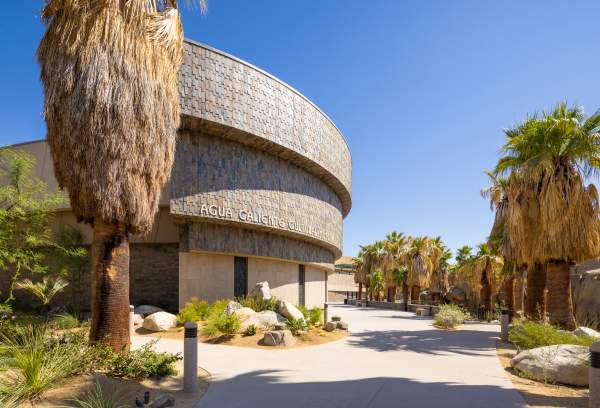
Today, that legacy continues through modern development and stewardship by the Agua Caliente Band of Cahuilla Indians, including the preservation and interpretation of the springs at the Agua Caliente Cultural Plaza.
Visitors can experience this history firsthand while learning about the deeper cultural meaning of the site—where ancient tradition and contemporary Palm Springs meet.
Economic Development and Modern Governance
In the following decades, Tribal Members gained more access to healthcare, education, and job opportunities despite continued shortcomings in income and land ownership. Federal legislation such as the Indian Education Act (1972), the American Indian Religious Freedom Act (1979), and the Indian Gaming Regulatory Act (1988) also played a crucial role in the development and protection of tribal culture and businesses.
Under the 99-year lease agreements, the tribe receives rent payments, revenue sharing, and other economic benefits from the leased lands. The revenue generated from these leases has played a crucial role in supporting tribal programs, infrastructure development, education, healthcare, and other essential services for tribal members.
The checkerboard reservation land of Palm Springs, with its mix of tribal and non-tribal lands, has created a unique dynamic in the city's growth and development. It has allowed the tribe to maintain a strong presence within the community while collaborating with non-tribal entities to promote economic prosperity.
However, the 99-year land leases have also posed challenges and complexities. As the leases approach their expiration, discussions and negotiations take place between the tribe and the lessees regarding lease extensions or new agreements. These negotiations involve considerations such as land values, rental rates, and the evolving needs and goals of both tribal and non-tribal parties.
The checkerboard reservation land system has shaped Palm Springs' landscape and contributed to the tribe's economic self-sufficiency. It highlights the tribe's ability to adapt and navigate complex land-ownership issues while striving to maintain its cultural heritage and provide for the welfare of its community.
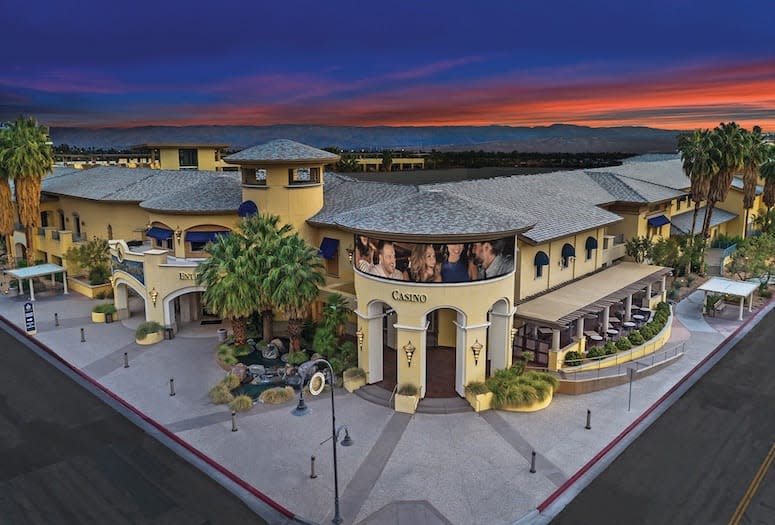
Today, the Agua Caliente Band of Cahuilla Indians operates three highly successful casinos, including the Agua Caliente Casino Resort Palm Springs.
Cultural Preservation and Living History
The Agua Caliente Band of Cahuilla Indians continues to play an essential role in the Palm Springs area. They actively engage in tribal governance, cultural preservation, and the promotion of awareness of their heritage. The Agua Caliente Band of Cahuilla Indians is one of the region's federally recognized tribes and has made significant contributions to the local economy and community through its successful casino and resort operations.
Perhaps the most important part of the Cahuilla story is that it hasn’t ended—it’s still being created and shared. Through the telling and retelling of their past, the Cahuilla have their own eternal story, one that can never be erased or forgotten.
The tribe's history is a testament to its enduring spirit and ongoing efforts to maintain its cultural identity in the face of adversity. They serve as a reminder of the rich cultural diversity and history that have shaped the Palm Springs area.
Visit the Agua Caliente Cultural Museum to learn more. The museum showcases the history, art, and traditions of the Cahuilla people and serves as a cultural center and educational resource for tribal members and the general public.
Other Cahuilla Tribes
Today, there are nine federally recognized Cahuilla tribes, including the Agua Caliente Band of Cahuilla Indians. In 1955, they established their own Tribal Council to oversee all Tribal government affairs. Each of the nine tribes has its own reservation and tribal council. These Indian reservations are located in the same general territory where the Cahuilla have lived for thousands of years, encompassing Imperial, Riverside, and San Diego counties.
Other Cahuilla Tribes include:
- Augustine Band of Cahuilla Indians, Coachella
- Cabazon Band of Mission Indians, Indio
- Cahuilla Band of Mission Indians of the Cahuilla Reservation, Anza
- Los Coyotes Band of Cahuilla and Cupenor Indians of the Los Coyotes Reservation, Warner Springs, San Diego County
- Morongo Band of Cahuilla Mission Indians of the Morongo Reservation, Banning
- Ramona Band of Cahuilla, Anza
- Santa Rosa Band of Cahuilla Indians, Riverside County, between Palm Springs and Anza
- Torres-Martinez Desert Cahuilla Indians, Thermal
A Continuing Story
The history of the Agua Caliente Band of Cahuilla Indians is one of endurance, adaptation, and sovereignty.
Despite centuries of external pressures, from colonization to federal policy, the Tribe has maintained its cultural identity and strengthened its role in shaping the region.
Palm Springs exists within this history. Understanding the city means recognizing the people who have called this land home for generations—and whose story continues to unfold today.
Sources & Further Reading
This overview draws from a combination of tribal resources, historical records, and academic research. For deeper study, the following sources provide valuable context and expanded detail:
- Agua Caliente Band of Cahuilla Indians — Official tribal history, governance, and cultural initiatives
- Agua Caliente Cultural Museum — Exhibits, oral histories, and immersive storytelling
- Palm Springs Historical Society — Archival photographs and regional documentation
- The Cahuilla by William Duncan Strong — Foundational ethnographic study
- Mukat’s People by Lowell John Bean — Detailed account of Cahuilla culture and cosmology
- Bureau of Indian Affairs — Federal records on reservation policy and land allotment
- U.S. National Archives — Documents related to the Dawes Act and reservation establishment